Marcel
de Groot
CEO

Sometimes the geopolitical unrest in the Middle East, with fluctuating oil prices and questions over energy security, can feel like a distant concern. Yet the effects of these global tensions filter through to the local property market faster than you might expect. For anyone making decisions about premises today, the office is no longer just a physical workplace, but a strategic tool for keeping your organisation stable and agile.
The role of your office is changing: from a static given to a dynamic base that offers stability against external shocks. To safeguard that stability, there are five pillars currently determining whether your office space is ready for tomorrow's challenges.
Looking for a new space that's already prepared for this? We're happy to help you find the right match.
The days of looking only at the base rent per square metre are behind us. With the energy market as volatile as it is, service charges have become the new uncertain factor in the monthly budget.
By choosing now a building that is fundamentally efficient with resources, you make your operations less dependent on external energy suppliers. This provides the stability needed to keep making sound financial decisions in the long term.
When fuel prices rise, employees feel it directly in their wallets. Commuting by car thus becomes a risk factor for balance within your team and for overall employee satisfaction.
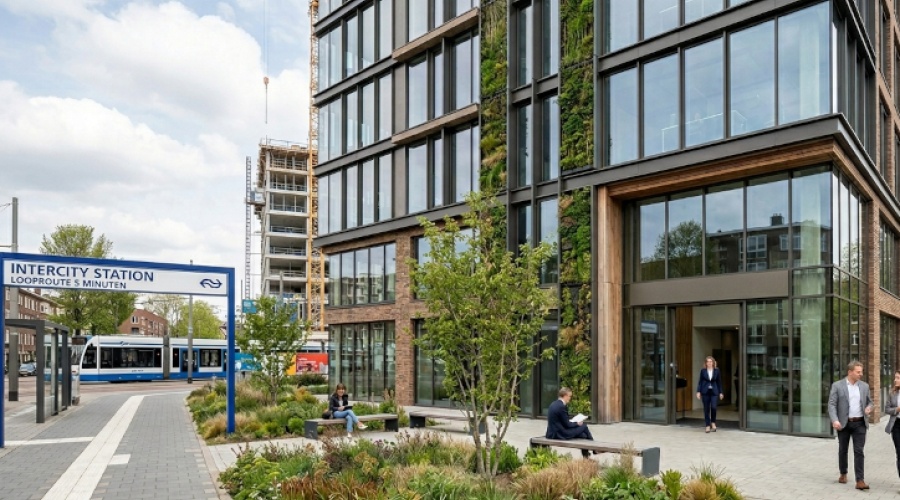
A strategic choice of location therefore feeds directly into your attractiveness as an employer. Removing the daily stress of traffic jams and fuel costs results in a team that shows up with more energy and focus.
In a world that feels unsettled, people look for stability and social connection. Your office plays a vital role here as a point of calm where the daily hustle is kept at bay, if only for a while.
By turning the office into a destination employees actually want to be at, you strengthen your shared culture. A safe, inspiring environment acts as the social glue that holds a team together, precisely when the world outside feels unpredictable.
Fitting out a new office is challenging today because of disrupted trade routes and long lead times on essential materials and furniture.
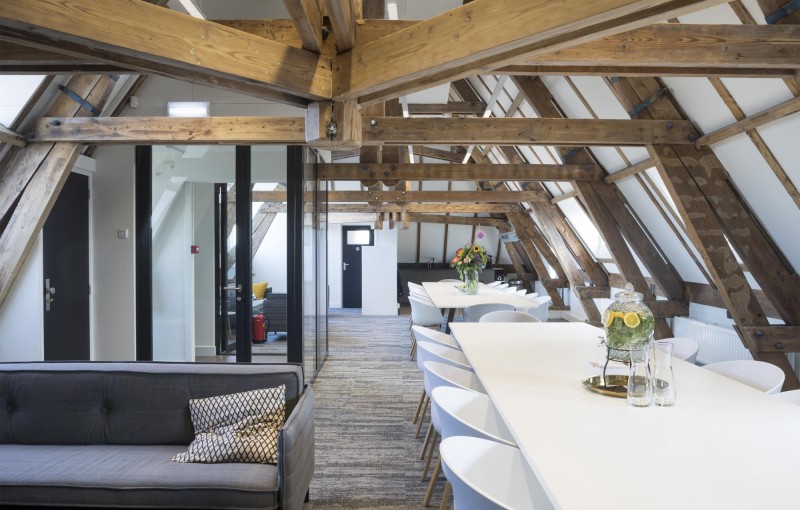
At a time when speed and adaptability make the difference, a ready-to-use office gives you the necessary head start. You can scale up or start operating immediately, without the risks that come with project management in an overstretched construction market.
The key lesson of recent years is that the world can change faster than we ever thought possible. Rigid ten-year leases simply no longer fit this dynamic.
Real stability comes from the ability to move with the market. An agile contract ensures your premises always support your business goals, and never become a liability during economic or political shifts.
The uncertainty in the world doesn't call for standing still, but for a deliberate repositioning of your own base. An office that's energy efficient, excellently connected by rail, and delivered fully fitted out, is in 2026 no longer a luxury, but a necessary foundation. By making these choices now, you build an organisation that stays stable, whatever economic or geopolitical winds are blowing. We're seeing landlords make this shift deliberately too; in Amsterdam, for example, we see supply increasingly geared towards tenants' changing requirements.
Real certainty comes when your premises are no longer a variable cost concern, but a reliable anchor that offers peace of mind to both leadership and the team. That creates the space to focus on what really matters: the growth and continuity of your business.
Looking for new office space that meets these five criteria? Our advisors know the market and are happy to help you explore the best options.